
We’re in a Bear Market. Now What?
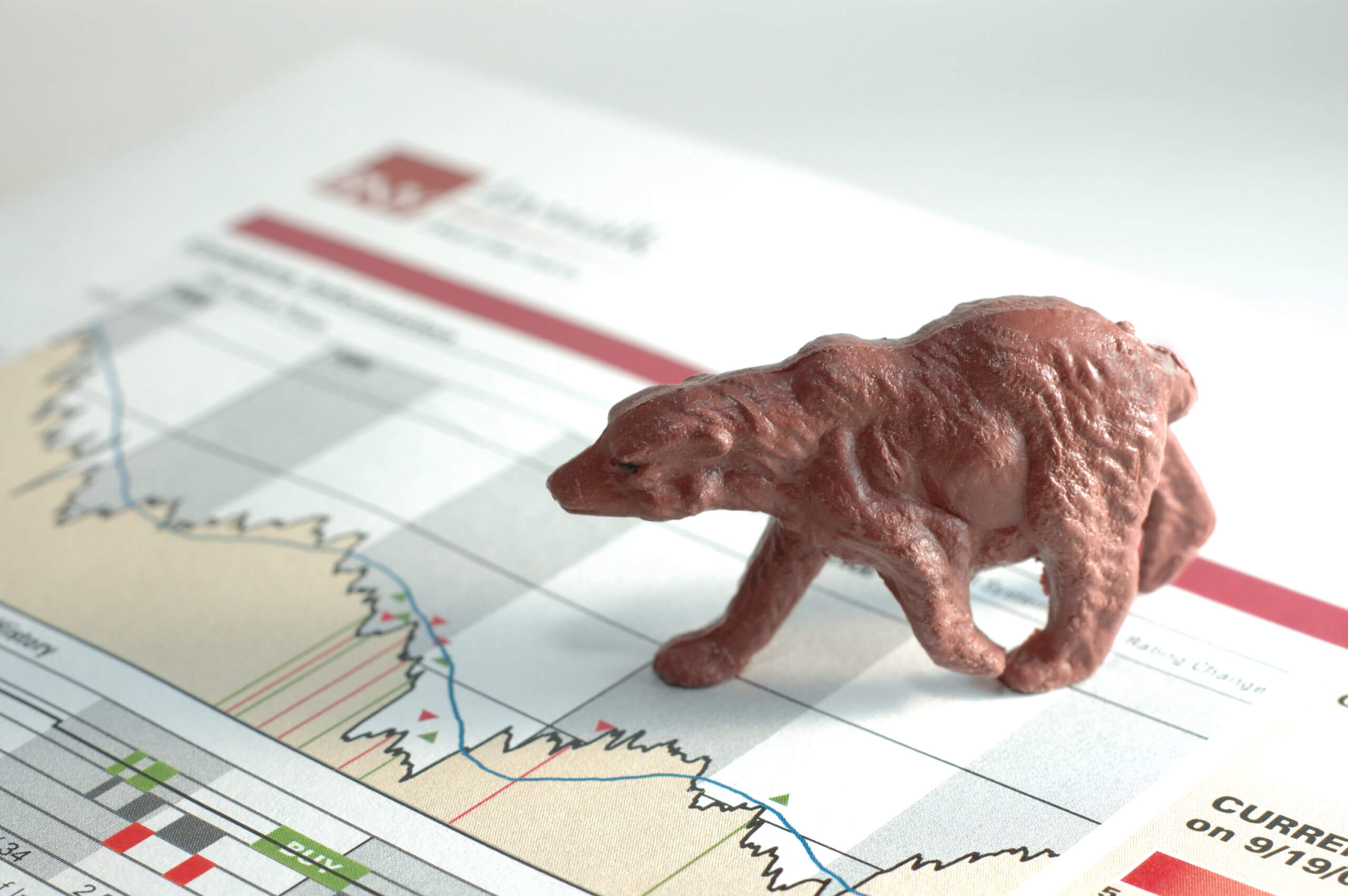
On June 13, 2022, the U.S. economy officially entered a bear market. You may be wondering what this is, and what it means for the economy, and for you as a private consumer and investor. Here, we’ve outlined what you need to know about bear markets, what you can expect to happen with the economy in the coming months, and possible steps you may want to take.
What is a bear market?
First, let’s explore the exact parameters that define a bear market.
According to S&P Global, a bear market is a term used by Wall Street when an index, such as the Dow Jones Industrial Average, the S&P 500, or an individual stock falls 20% or more from a recent high over a prolonged period of time. Both conditions must be present for a bear market to occur.
Although these are the official factors, most bear markets actually happen when there is a drop in the market that is significantly greater than 20%. In fact, since the contemporary S&P 500 index was established in the late 1920s, the average bear market saw a 38% price decline. Overall, stocks tend to lose an average of 36% in a bear market.
It’s important to note that a bear market is a normal part of the market cycle and is not necessarily a sign of an impending economic catastrophe.
What causes the economy to enter a bear market?
The economy enters a bear market when investors lack confidence in the market and in individual stocks, so they begin pulling out of their investments. This leads to a weak market, which further prompts investors to pull out. Eventually, this can cause the market to sag for a prolonged period of time, leading to an official bear market. The most recent bear market before this one occurred in 2020 when the onset of the coronavirus pandemic led to general economic decline.
In 2022, the S&P 500 started at close to 4,800 points. However, within months, the ripple effects of the war in Ukraine coupled with record-breaking inflation rates led to an ongoing weak market until conditions reached an official bear market in June. Rising fuel costs as well as the higher interest rates set by the Federal Reserve contributed to the onset of a bear market as well.
How long does a bear market last?
Since the S&P 500 index was established in the late 1920s, the average bear market lasted approximately 10 months. In contrast, the average bull market lasts 2.7 years. However, there is no definitive way of knowing when a particular bear market will end. Due to the extreme conditions that caused the current bear market, experts expect it to last through the rest of 2022, at least.
Investing in a bear market
If you’re an investor, you may be wondering what, if any, financial moves you should be making during this current bear market.
First, whenever the market is falling, it’s best to choose defensive investments. This includes consumer staples, or what some financial advisors refer to as “toothpaste stocks”. Other defensive investments include utilities and health care. The obvious rationale behind this advice is that people will always need these items and services regardless of what happens to the economy.
Next, it’s best to continue making regular contributions to a 401(k), index funds, or any other retirement or long-term investments. The overall value of these accounts will dip at the start of a bear market, but when the market recovers, so will these long-term accounts. Bonds and precious metals are similar investment strategies that can have significant payoffs when a bear market turns bullish.
Finally, if you dare, you may want to cash in on low prices by purchasing other kinds of stocks and assets that have proven to perform well immediately following bear markets. Such stocks include big tech, dividend, and agriculture stocks. You’ll be able to buy these at a discount now and then profit from the growth when the market emerges from the downturn.
Does a bear market always lead to a recession?
A recession is generally defined by a decline in the Gross Domestic Product (GDP) over two consecutive quarters. Though a bear market signifies a weak economy, its occurrence does not mean a recession is inevitable. In the current market, experts are divided on how or when the bear market will end.
The news on the economic front can be depressing – and confusing. Let this guide help you in navigating a bear market successfully.
Related Posts
-

What Is a Credit Union Referral Program and How Does It Work?
People nowadays want more personalized experiences, and a credit union is often a better choice for a more personal, community-focused… -

Crush Your Financial Resolutions: 7 Financial Goals to Tackle in 2026
Exercise more. Eat healthier. Reduce stress. Save More. You might have made these common New Year’s resolutions before. Now is… -

Saving On Home Renovations
Is your kitchen in desperate need of a facelift? Bathrooms haven’t been remodeled since Bush was in the White House? (And…